• Skip to primary navigation
  • Skip to main content
  • Skip to primary sidebar
  • Skip to footer
AquaVilla logotype
  • Husmodeller
  • Marine Products
  • Special Projects
  • Project
  • About Aqua Floating Group
    • About Aqua Floating Group
    • Patents and Construction
  • Services
    • Services
    • Frågor och svar
  • English
    • Danish
    • Swedish
Marina produkter

Concrete pontoons and concrete piers

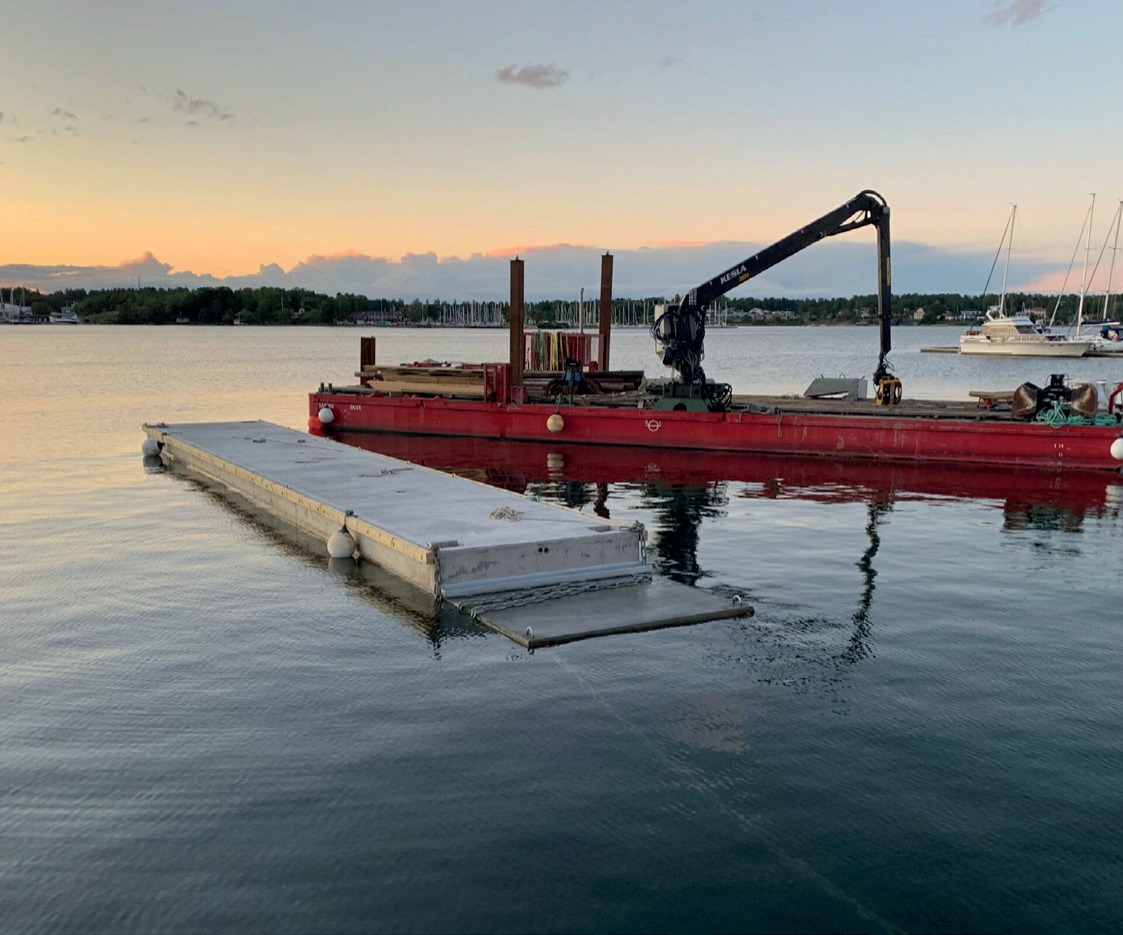
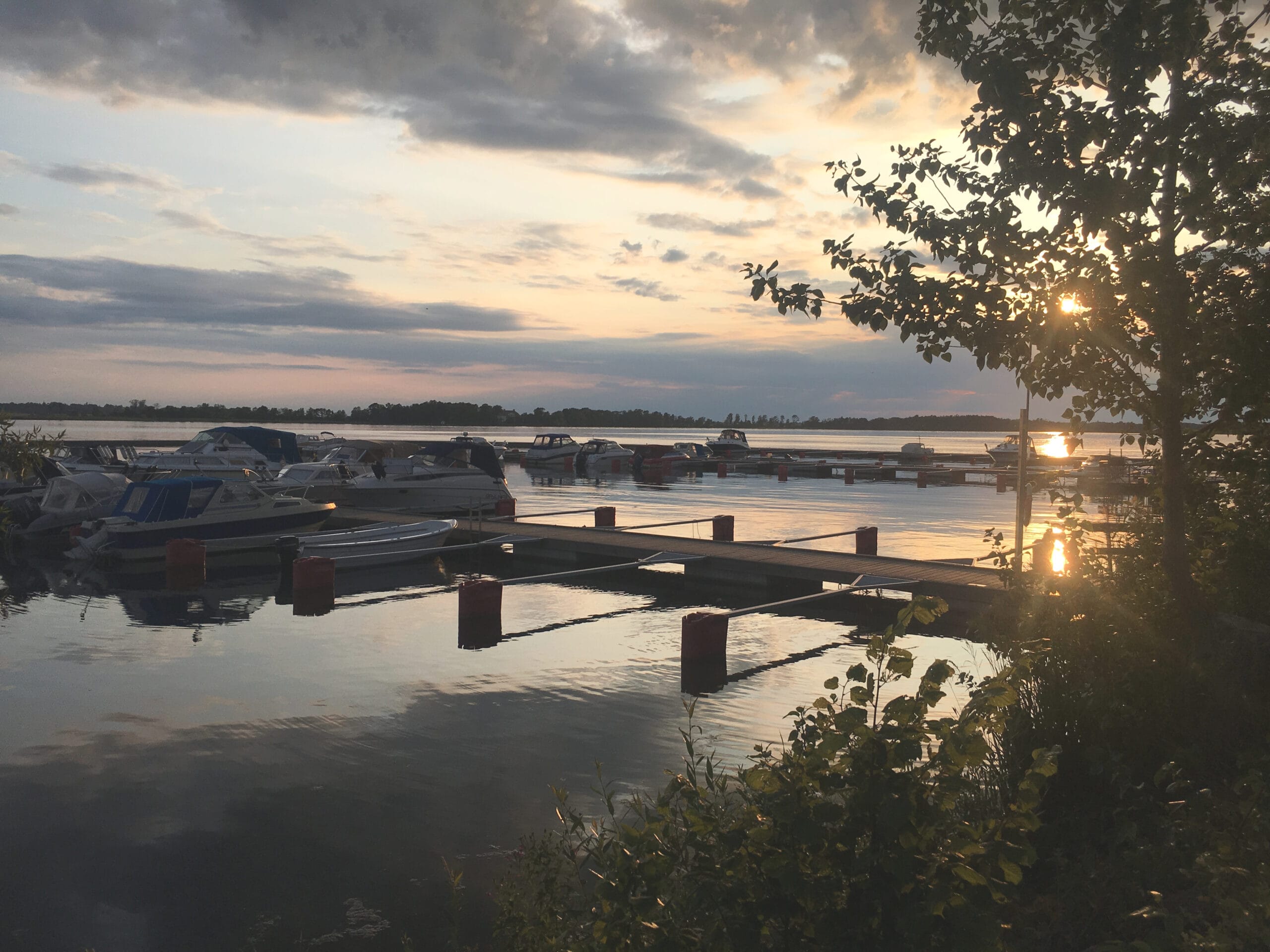
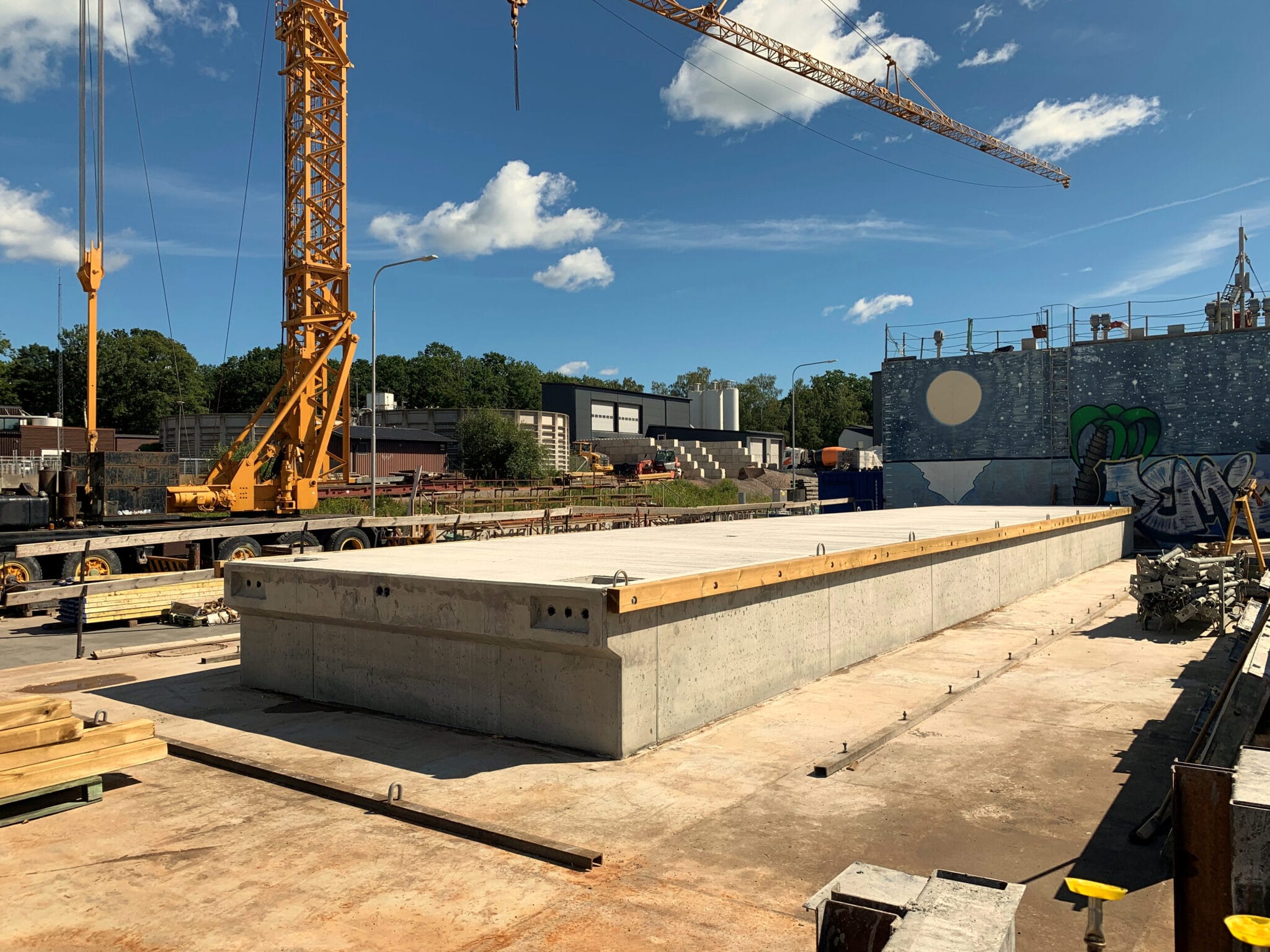
Concrete pontoons and concrete jetties are used as mooring jetties in marinas and marinas. Concrete pontoons have great stability and high load-bearing capacity with a constant freeboard height and are designed for more exposed locations. The construction consists of reinforced concrete with a core of cellular plastic, which makes it unsinkable and gives it a long service life. Concrete jetties and concrete pontoons intended for marinas and dock facilities are constructed with an open bottom. The concrete pontoons can also be used as a floating foundation for buildings and are then built with a tight bottom for the highest possible quality and service life.
Pontonbrygga-2048x1536

Solid concrete pontoon with minimal maintenance and many possibilities

Stable concrete pontoons and jetties with open or closed bottom. Manufactured in various lengths, up to 50 meters and widths up to 14 meters in one piece, with wall heights from 0.95 meters up to 3.2 meters. The concrete pontoons have a high load-bearing capacity (depending on size) and can be adapted with accessories for electricity, water, wooden decks and lighting (as well as sewage for year-round ports). The concrete pontoons are also compatible with the AquaEnergySystem heating and cooling system. This allows buildings on the pontoons to be supplied with heat or cooling using a heat pump.

Teknisk information

Dimensions

Length
10.0 - 12.5 - 15.0 - 20.0 m
Width without Fender Strip
2.4 - 3.0 - 4.0 - 5.0 m
Width with Fender Strip
2.7 - 3.3 - 4.3 - 5.3 m
Total Height
0.90 - 1.05 - 1.2 - 1.5 - 1.8 m
Freeboard Height
approx. 0.60 - 1.20 m
Concrete Wall Thickness
70-80 mm
Concrete Deck Thickness
70 - 110 mm
Other Dimensions
Can be offered upon request. Max width 14 m and max length 48 m.
Weight
approx. 500 kg/m²

Material

Concrete/Exposure class
Frost-resistant concrete C40/50, VCT 0.4, Air 6.0%, XS2-XF4-XC4 (highest exposure class)
Reinforcement
NPS 50 5100 square reinforced
Foam insulation
EPS80
Castings
Hot-dip galvanized and acid-resistant
Fender strip
95*145, pressure-treated wood. Class NTR/A

Other information

Permitted wave height
0.5 m
Optional extras
Extra options: Stainless conical chain tube, chain 20-32 mm, concrete anchor 1-3.5 tons, wooden deck. Design changes reserved.

Filer

Product information concrete pontoons and concrete piers.pdf

4 Variants

There are 4 categories of floating concrete structures.

Open bottom - "regular" pontoon and pier, economical Expand

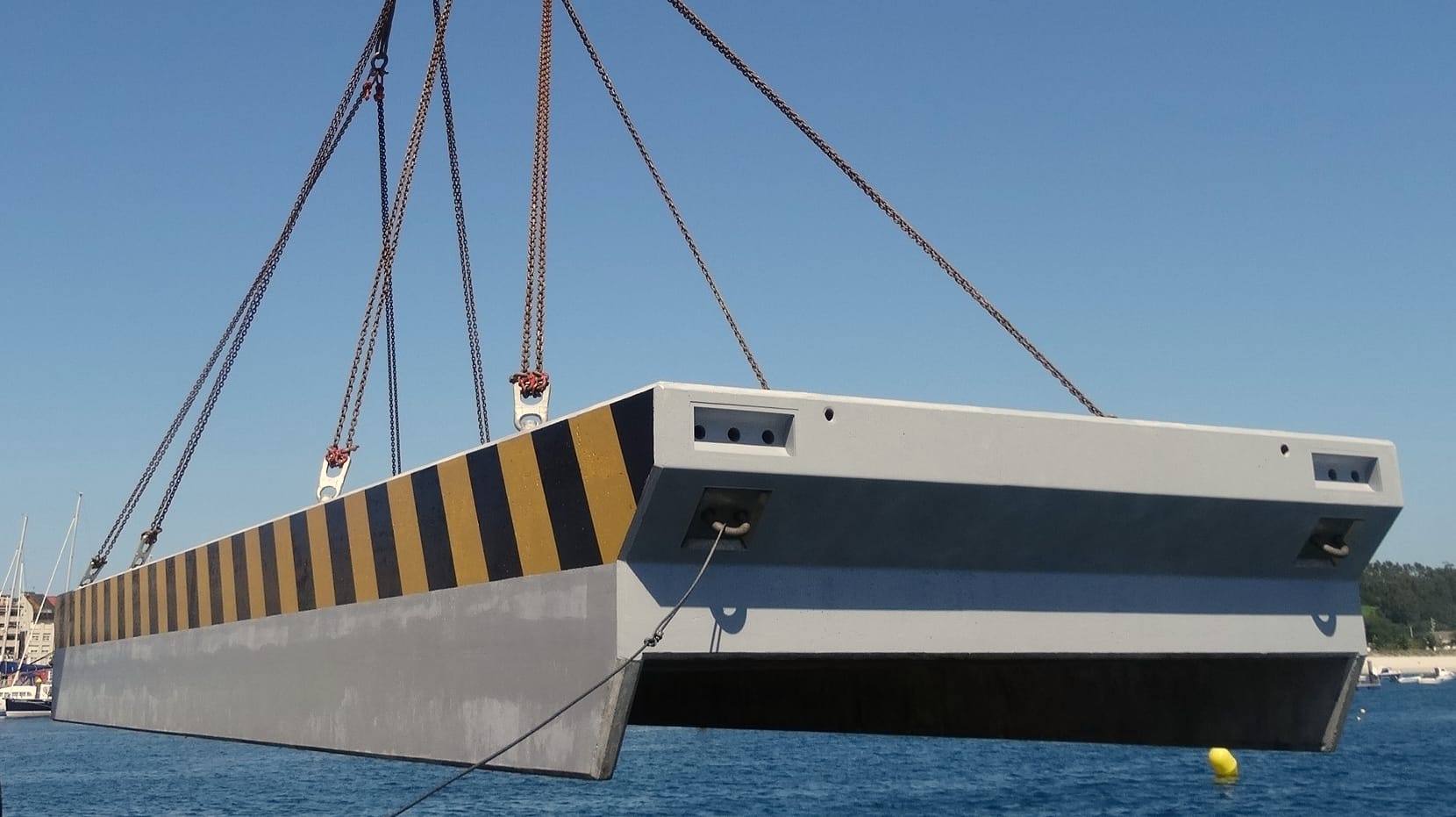
Pontoons with an open bottom are the dominant construction on floating docks, this is because they are relatively cheap to produce. They are built of EPS (cellular plastic) as a permanent form for the concrete on the walls and deck, otherwise the EPS is unprotected at the bottom of the structure. Because of this we call this an open structure which works excellently as a floating dock or pier, but is less suitable if you are going to place a building on it, because the EPS absorbs water over time.

Closed bottom - suitable as a platform for building Expand

A closed pontoon structure has, in addition to the walls and deck, also a concrete bottom, which prevents water from reaching the EPS, which in this case primarily serves as a permanent form for the pontoon structure. This structure works great for placing a building on, as it does not absorb water over time. The concrete bottom plate is also a prerequisite for being able to cast the AquaEnergySystem collector tubes patented by AquaVilla. An energy system that captures the energy in the surrounding water, an energy that can then be used to heat or cool a building.

Open caisson - interior for living/storage Expand

An open caisson can be most easily compared to a ship's hull, where the interior is used as a living space or a storage room. AquaVilla uses this type of floating body in most of its constructions, because with an open construction, a house frame can be built several stories high on land, and then lifted into the caisson as a finished unit. It is of course perfectly possible to cast the AquaEnergySystem system into the caisson's bottom plate.

Closed caisson - concrete vault/deck, interior for living/storage Expand

The closed caisson has a concrete vault/deck, which creates a completely closed interior of the caisson. The method is used in the AquaPiers, which AquaVilla uses as infrastructure for the floating communities that Aqua Floating Group is also building. The closed structure can be insulated and furnished and used as a residence or storage space. However, the furnishings must be built on site, as the closed vault/deck prevents the assembly of finished house frames.

ludvig-aqua-floating-group
Ludvig Elisson

Kontakta oss idag

You're warmly welcome to contact us and we'll tell you more!


    Våra marina produkter

    • Concrete pontoons and jetties

      Concrete pontoons and concrete jetties are used as mooring jetties in marinas and marinas. Concrete pontoons have great stability and high load-bearing capacity with a constant freeboard height and are designed for more exposed locations. The construction consists of reinforced concrete with a core of cellular plastic, which makes it unsinkable and gives it a long service life.

      Read more
    • Pontoons and piers in concrete and wood

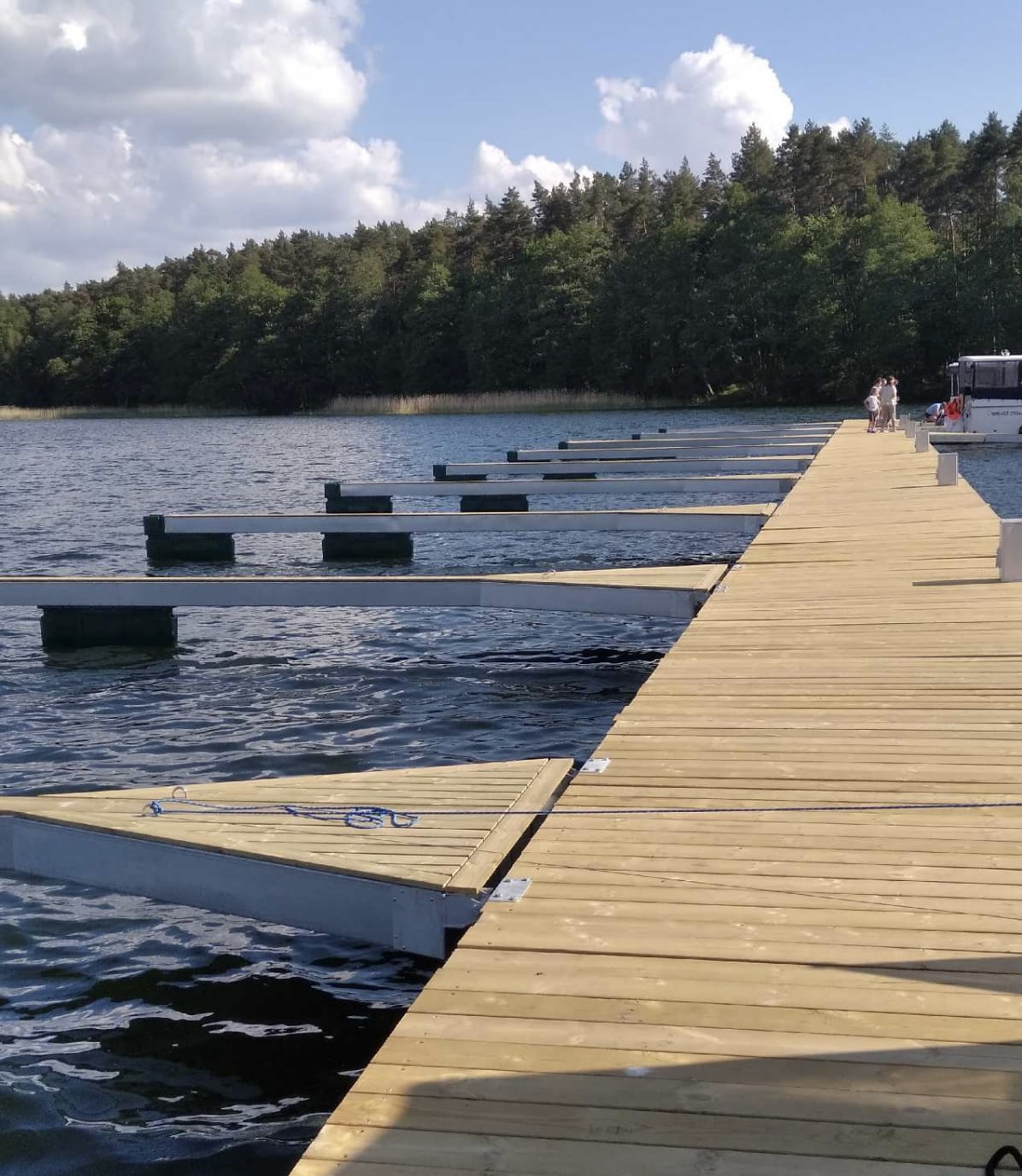
      A wood-concrete ponton or pier is a cost-effective construction for the sheltered location that is less exposed to wind and wave forces.

      Read more
    • Y-Booms

      Read more
    • AquaParking

      As cities grow and land space becomes increasingly limited, new, smart solutions are needed. AquaParking is an innovative parking garage on the water, developed for floating communities, coastal cities and urban environments with increasing parking needs.

      Read more
    • AquaRecycling

      AquaRecycling is our latest product, a floating recycling station. From 2027, there are requirements that packaging, newspapers and hazardous waste, among other things, must be sorted before being thrown away.

      Read more
    • Clubhouse Boat Club Lilla Essingen

      Floating clubhouse for Lilla Essingen Boat Club in Stockholm: The clubhouse is placed on a 25x6 meter concrete pontoon/floating foundation built in one piece. The clubhouse or another building can be adapted to your wishes in size and design. The concrete pontoon/floating foundation has a high load-bearing capacity and can be adapted with accessories for electricity, water, wooden deck and lighting.

      Read more
    • Floating jettys

      Floating jettys are specially designed and dimensioned to protect ports in exposed locations. They have deep fenders for the best possible damping and inertia.

      Read more

    Aqua Floating Group

    After many years of development work, the company AquaVilla Produktion AB started the first large-scale production of villas for permanent residence on “real” lake plots in 2000. Eight villas were produced with permanent anchorage in Pampas Marina in Solna. The rest is a success story and new, marine communities on the water are now emerging in more and more places around Sweden. In 2019, the company changed its name to Aqua Floating Group AB.

    Read more about Aqua Floating Group

    Primary Sidebar

    Footer

    Kontakt

    Aqua Floating Group AB
    Lisaviksvägen 1, 593 50 Västervik

    +46(0)490 36 900
    info@aquafg.se

    Navigera

    • Marine Products
    • Special Projects
    • Project
    • About Aqua Floating Group
    • Patents and Construction
    • Services
    • Frågor och svar
    • Privacy policy

    Integritetsvillkor

    AquaVilla – Ett varumärke från Aqua floating group.

    Copyright © 2026 · Aqua Floating Group AB

    En digital lösning från Everday